If You’re Looking For BIG Results Within a month, Then You’re In The Right Place, My Friend!
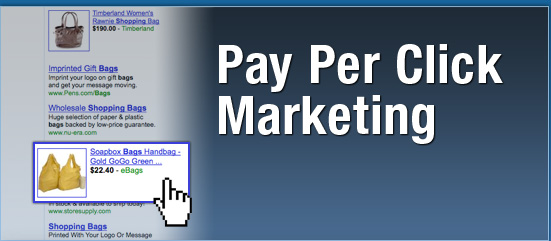
When you sign up for PPC marketing, the search engines will place your business’ Ad on their website and you’ll only be charged for space when someone clicks on your Ad.

- It’s good for searchers – Research indicates that searchers click on paid search ads more often than any other form of digital advertising. This means that people really don’t mind being advertised to, provided that the products and services advertised actually fit the searcher’s needs. Plus, Google has developed an excellent formula for ensuring that PPC ads meet the user’s needs.
- It’s good for advertisers - Advertisers are offered a unique means of putting their message in front of an audience who is actively and specifically seeking out their product. Because searchers reveal their intent through their search query, advertisers are able to measure the quality of traffic that results from search engine clicks.
- It’s good for search engines – PPC enables search engines to cater to searchers and advertisers simultaneously. The searchers comprise their user-base, while the advertisers provide them with their revenue stream. The engines want to provide relevant results, first and foremost, while offering a highly targeted, revenue-driving advertising channel.
When you first sign up with a PPC program such as Google AdWords, you’ll place a certain amount of money (called a ‘bid’ ) on particular keywords. These keywords are words or phrases that are pertinent to your business or industry. They could be the name of your company, a name of a product, or the name of the industry you’re in.
Thousands, and perhaps even millions of people are bidding on these keywords depending on the keyword, and the highest bid wins.
So if you place a bid for $0.15 on the keyword “Michigan florist” you might win the bid and your ad will show up first in the search engines listings and pages of ads.
By looking at the 3 helpful tips below, you should be able to launch an effective PPC campaign that will bring new visitors to your site.
1. Create Goals for your PPC Campaign
There are three questions that will be helpful:
- Who is targeted by this Campaign?
- What outcome are you looking for?
- How will you know the PPC Campaign is a success?
2. Establish an Easy to Use Campaign Structure
The 2 words to keep in mind here are Relevant and Simple:
3. Check your PPC Settings in Google Adwords
So, what makes a good landing page? Common best practices for page design include few key elements:
- Compelling headline
- Concise, targeted copy
- Eye-catching, clickable call-to-action (CTA)
- User-friendly lead capture form
- Attractive overall design
There are several advantages to incorporating pay-per-click marketing into your small business internet marketing strategy:
- It's more cost-effective than the alternative
- It's measurable and data-driven
- It's repeatable and scalable
This increases the likelihood that someone will click on your ad, go to your website, and buy your product or service.
Every pay-per-click campaign is unique, but the most successful campaigns all share the same characteristics: a logical, organized structure, comprehensive keyword research, and ongoing management and maintenance.
Benefits of PPC for Small Business Online Promotion:
- You only pay when an interested person clicks.
- You set your budget to control costs.
- Unlike organic search, PPC can show results very quickly.
- You can reach your target consumer at the right time with the right ad.
- PPC data can inform your other marketing channels.
- No dependencies on SEO or Google Algorithmic changes.
Key Features of PPC Marketing:
- First Page Exposure in the Top 3 Search Engines
- Immediate Traffic
- Consistent Traffic
- Targeted Ads
- Geo-Targeting and Ad Scheduling
- Relevance
- Tracking
- Branding




 But how do you even make a Facebook page, if you haven’t already? And how do you keep it maintained and updated? Not just with posts, but so that you really get noticed?